


Digital Customs Clearance System Reduces Processing Time
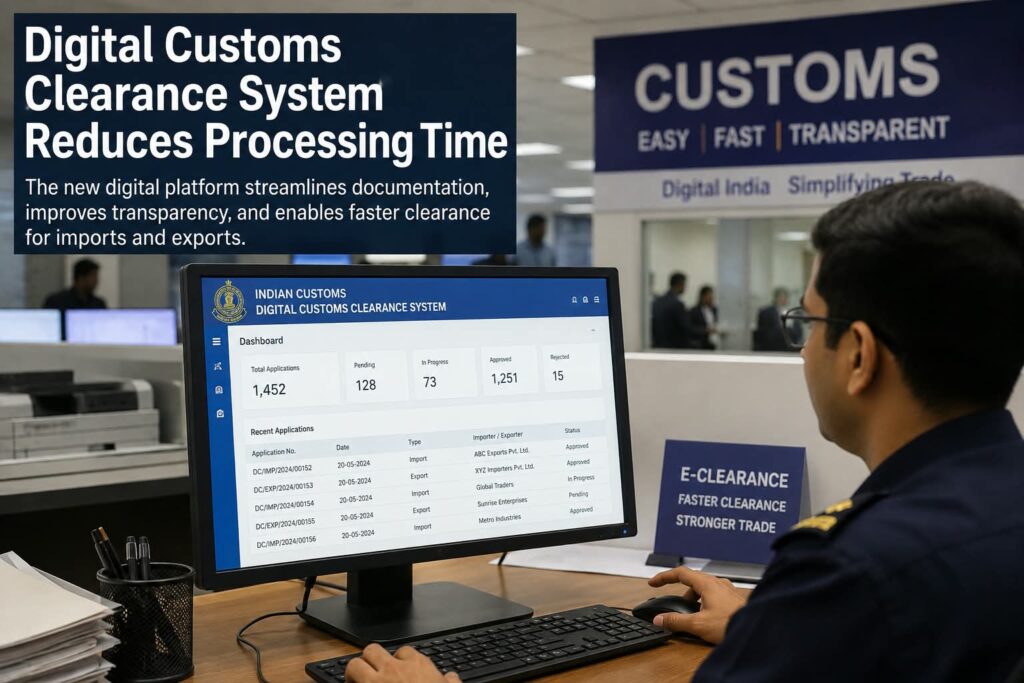
Digital Customs Clearance System Reduces Processing Time
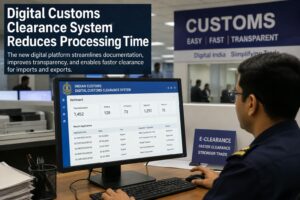
India’s digital customs infrastructure is helping streamline import and export clearance by moving documentation, assessment, regulatory approvals and tracking into electronic systems. The country’s customs modernisation programme uses platforms including ICEGATE, the Indian Customs EDI System (ICES), Faceless Assessment, e-Sanchit and SWIFT to reduce physical interaction, improve transparency and speed up cargo processing.
The latest performance data from the Indian Customs EODB Dashboard shows a continued focus on faster clearance. The dashboard currently sets a maximum target of 48 hours for import clearance, while its daily tracker monitors Bills of Entry processed through air, inland container depot and sea locations. On August 16, 2026, 87% of the 2,711 Bills of Entry tracked in the combined daily figures were shown as cleared within the relevant performance measurement.
ICEGATE Becomes the Digital Gateway
ICEGATE acts as the main electronic interface between Customs and importers, exporters, customs brokers, logistics companies, banks and other regulatory agencies.
Through the platform, businesses can submit customs-related documents and declarations electronically, track transactions and access various services without depending on repeated physical visits to customs offices. The portal also provides online payment and other trade-related facilities.
The scale of the platform is significant. ICEGATE reported more than 3.7 lakh documents filed during August 10–16, 2026, while more than 3 lakh website hits were recorded during the same week.
Faceless Assessment Speeds Up Processing
One of the most important reforms is Faceless Assessment, which removes much of the physical interaction between customs officers and traders.
Under the system, Bills of Entry can be electronically assigned to specialised Faceless Assessment Groups rather than being dependent on the traditional physical jurisdiction of the port. This promotes greater standardisation and allows assessments to be carried out by specialised officers.
The system also makes the assessment process more transparent because importers and exporters do not have to know which individual customs officer is assessing their documents.
The objective is to reduce unnecessary delays while making better use of customs officers and improving consistency in assessments.
Paperless Documentation Reduces Delays
Another important component is e-Sanchit, which enables electronic submission of supporting documents.
Instead of depending on large volumes of physical paperwork, importers and exporters can submit documents electronically through the customs ecosystem. According to the National Informatics Centre, the initiative is designed to support paperless processing, reduce physical interaction and increase the speed of clearance.
This is particularly important for businesses handling large numbers of shipments, where manual documentation can increase processing time and administrative costs.
SWIFT Brings Regulatory Approvals Online
The Single Window Interface for Facilitating Trade (SWIFT) allows importers and exporters to submit clearance documents through a single electronic interface.
Where approvals or permissions from participating government agencies are required, the process can be handled electronically rather than requiring traders to approach multiple departments separately.
The system is designed to reduce interaction with government agencies, lower dwell time and reduce the cost of doing business.
The government’s latest annual report says SWIFT 2.0 is being expanded, with features including a unified dashboard, single sign-on and unified applications for regulatory approvals. Full-scale implementation is expected by the end of 2026.
Risk-Based Processing Helps Clear Low-Risk Cargo
Digital customs processing also allows technology to play a larger role in identifying shipments that require detailed examination.
The Risk Management System analyses electronic declarations and determines whether a Bill of Entry should undergo assessment, examination or other customs action. Eligible consignments can move through the system without unnecessary assessment or examination when the risk-management process determines that such intervention is not required.
This approach allows Customs to concentrate resources on higher-risk shipments while facilitating legitimate trade.
Port Automation Adds Another Layer
Digitalisation is also extending beyond customs offices to ports and container gates.
At Jawaharlal Nehru Port Authority, gate automation for self-sealed export containers has been partially implemented. Universal electronic seal readers integrated with ICEGATE through APIs can read RFID tags and validate container information in real time, reducing manual intervention.
Such systems can help connect customs clearance with physical movement of cargo, reducing bottlenecks between documentation approval and port operations.
New Digital Services Continue to Be Added
India’s customs technology ecosystem continues to expand. ICEGATE’s current updates include automated customs refund processing for eligible exporters and new digital services under SWIFT 2.0.
The portal has also moved toward API-based electronic filing for certain stakeholders, with the earlier MFTP mode for SCMTR messaging discontinued from July 14, 2026.
These developments indicate a broader shift from standalone digital forms toward interconnected systems that allow information to move electronically between customs, ports, regulators and businesses.
Benefits for Importers and Exporters
Faster digital processing can provide several advantages to international traders:
- Shorter clearance times for eligible consignments
- Less paperwork and reduced physical documentation
- Lower administrative costs
- Improved transparency in customs processing
- Online tracking of applications and declarations
- Reduced physical interaction with government offices
- More predictable cargo movement
- Better coordination between customs and regulatory agencies
For businesses operating on tight supply-chain schedules, even a reduction in clearance delays can have a significant effect on inventory, transportation and warehousing costs.
Challenges Still Remain
Digital customs does not mean that every shipment will be cleared immediately. Cargo can still require examination, additional documentation, regulatory approval or clarification.
The government has therefore established digital grievance and escalation mechanisms for cases involving delays. ICEGATE provides a Taxpayer Grievance Application through which registered users can report certain assessment delays and track their complaints.
Customs has also developed mechanisms involving Turant Suvidha Kendras, National Assessment Centres and an Anonymised Escalation Mechanism to address clearance bottlenecks.
Outlook
India’s customs system is moving steadily toward a more automated, paperless and data-driven model. The combination of ICEGATE, Faceless Assessment, e-Sanchit, SWIFT 2.0, risk-based processing and port automation is designed to make the movement of legitimate international cargo faster and more transparent.
The latest EODB dashboard’s 48-hour maximum target for import clearance demonstrates the importance being placed on reducing clearance time, while daily performance tracking provides customs authorities with a mechanism to monitor operational efficiency.
As SWIFT 2.0 and other digital initiatives expand during 2026, greater integration between Customs, ports and regulatory agencies could further reduce delays and improve India’s ease of doing business.
Conclusion
Digital customs clearance is becoming a key part of India’s trade-facilitation strategy. By replacing paper-based processes and unnecessary physical interactions with electronic filing, faceless assessment, automated risk management and real-time data exchange, the system is helping create a faster and more transparent environment for importers and exporters.
The ultimate impact will depend on continued system integration, reliable technology, accurate documentation and effective handling of exceptional cases. But with digital customs infrastructure expanding across India’s trade ecosystem, faster clearance and more efficient cargo movement are becoming increasingly central to the country’s global trade ambitions.
Sources: Indian Customs/ICEGATE, National Informatics Centre, Chennai Customs and Department of Economic Affairs.
About The Author