







Indian Seafarers Under Growing Maritime Security Threat as Vessels Face Rising Risks Across Key Global Trade Route
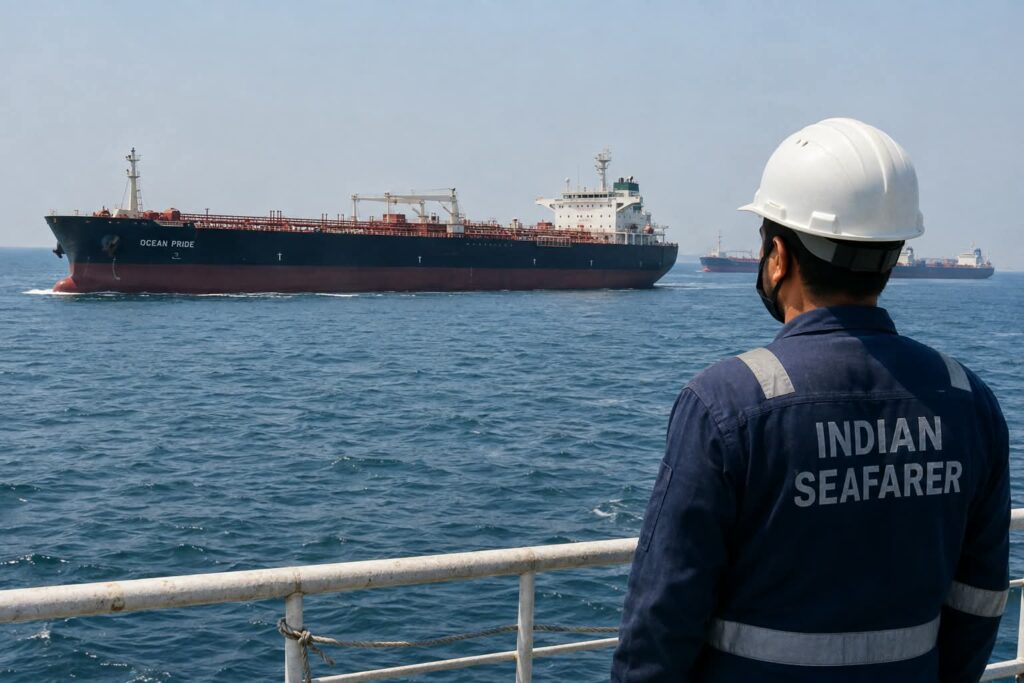
India is stepping up its focus on the safety of Indian seafarers as commercial shipping faces heightened security risks around the Strait of Hormuz, Gulf of Aden and the coasts of Yemen and Somalia.
The Ministry of External Affairs said it is closely monitoring incidents involving Indian sailors in high-risk maritime zones and reiterated that the safety of India’s seafaring community is a high priority. �
India Shipping News
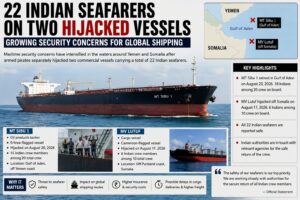
The development follows the recent hijacking of two commercial vessels carrying 22 Indian nationals—16 aboard the oil-products tanker MT Sibu 1 and six aboard the cargo vessel MV Lutuf. All Indian crew members were reported safe. �
Rediff +1
Why this matters for shipping
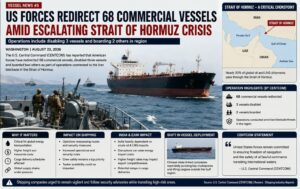
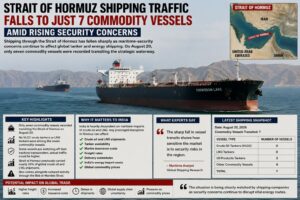
The security situation is also affecting vessel movements through major maritime chokepoints. Recent tracking data showed sharply reduced commodity-vessel traffic through the Strait of Hormuz, while traffic through the Bab el-Mandeb has also declined. �
Reuters
For shipping companies, this can mean:
Higher war-risk insurance premiums
Increased security expenditure
Longer or altered routes
Higher freight costs
Possible cargo delays
Greater pressure on vessel availability
Increased risks for seafarers
China changes tanker strategy
The security situation is already influencing major shipping operators. Two Chinese state-linked shipping companies have reportedly stopped sending some oil tankers through key Middle East chokepoints and are instead collecting oil cargoes outside the Gulf. �
Reuters
This demonstrates how quickly security concerns can translate into changes in vessel deployment and global energy logistics.
Impact on India’s EXIM sector
For India, the issue goes beyond crew safety. The country’s exporters and importers depend heavily on reliable maritime transport.
Any prolonged disruption in the Gulf of Aden, Red Sea or Strait of Hormuz could affect energy imports, freight rates, insurance costs, transit times and supply-chain reliability.
About The Author