













Dry Bulk Shipping Market Rebounds Strongly in Q3 2026
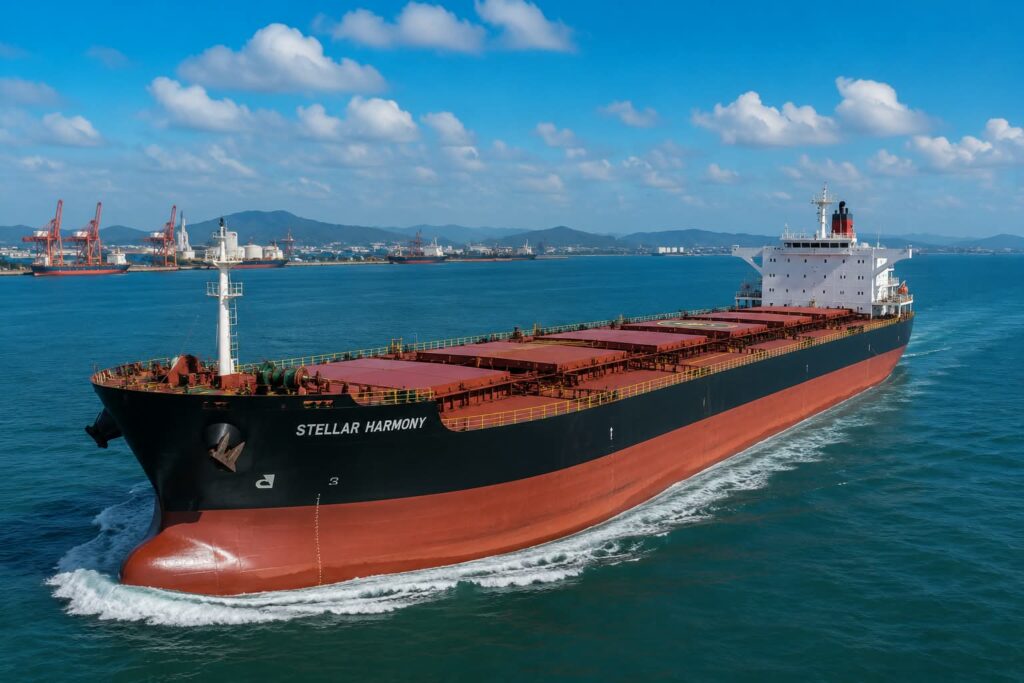
Dry Bulk Shipping Market Rebounds Strongly in Q3 2026
The global dry bulk shipping market has entered the third quarter of 2026 on a stronger footing, with freight rates and vessel earnings showing a significant improvement compared with the same period last year. The recovery has been particularly visible in the Capesize segment, while Panamax and other vessel classes have also benefited from stronger cargo flows and improved fleet utilisation.
Industry data shows that the recovery is being supported by increased demand for major dry bulk commodities, including iron ore, coal and grains. However, market conditions remain volatile, with vessel availability, Chinese commodity demand and geopolitical developments continuing to influence freight rates.
Capesize Segment Leads the Recovery
Capesize vessels have been the strongest performers in the dry bulk market during 2026. According to market data reported in August, average Capesize time-charter equivalent earnings for the first seven months of 2026 were around $30,400 per day, approximately 81% higher than the corresponding period in 2025. Capesize earnings reached about $46,538 per day in late May, before fluctuating during July and August.
The strong performance has been supported by higher cargo volumes, particularly iron ore and coal shipments. Capesize-carried cargo increased by approximately 4.8% to 936.7 million tonnes during the period covered by the latest industry assessment.
Recent Baltic market data also shows the strength of the segment. On August 7, the Baltic Capesize Index reached 5,128 points, with average daily earnings of approximately $46,512.
Iron Ore and Coal Remain Key Drivers
Iron ore and coal continue to form the foundation of global dry bulk demand. Industry data indicates that the two commodities together accounted for more than half of total dry bulk trade in the first seven months of 2026.
Iron ore shipments increased by around 1.5% to 992.2 million tonnes, while coal shipments grew by approximately 2.1% to 788.9 million tonnes.
China remains particularly important because of its role as a major importer of iron ore and other raw materials. However, elevated port inventories and weaker steel production have created uncertainty over the sustainability of Chinese demand.
Grain Trade Provides Additional Support
Grain shipments have emerged as another important source of demand. Global grain trade increased by approximately 10.4% to 358.9 million tonnes in the latest industry assessment.
South American grain exports have been particularly important for the Panamax market. S&P Global reported that East Coast South America-to-Far East shipments surged by 134% in the second quarter of 2026, helping tighten vessel availability and supporting Panamax rates. The global Panamax route index averaged around $18,933 per day in Q2, 65% higher than the previous year’s average.
Panamax and Smaller Vessels Show Mixed Performance
The recovery has not been uniform across every vessel class.
Panamax rates have remained relatively firm, supported by grain and coal movements, although increasing vessel availability in some regions has limited further gains. In early August, Panamax earnings were around $20,000 per day.
Supramax vessels have shown resilience, while the Handysize segment has faced more challenging conditions because of an imbalance between available tonnage and cargo demand.
This divergence highlights the importance of individual trade routes and commodity flows rather than relying solely on the overall dry bulk index.
Baltic Dry Index Remains Above Long-Term Averages
The Baltic Dry Index, a widely followed indicator of dry bulk freight market conditions, remained at relatively strong levels during the third quarter.
The index closed July at 2,732, above its one-year average of approximately 2,256 and its two-year average of about 1,885. However, the July level was below the May peak of 3,226, showing that the market had given back some of its earlier momentum.
By August 13, the BDI stood at approximately 2,844 points, with Capesize average earnings around $40,528 per day and Panamax earnings around $20,361 per day.
Fleet Supply Remains an Important Factor
The strength of the dry bulk market will also depend on how quickly vessel supply expands. Industry forecasts indicate that dry bulk trade demand could grow by around 2%–3% in 2026, broadly comparable with expected effective fleet supply growth of about 2.5%. This suggests that the market could remain relatively balanced if cargo demand continues to expand.
A balanced supply-demand environment would help prevent a rapid increase in available tonnage from putting excessive pressure on freight rates.
Outlook for the Rest of Q3 2026
The outlook for the remainder of the third quarter is cautiously positive. Stronger iron ore, coal and grain flows could continue supporting vessel utilisation and freight earnings, particularly in the Capesize and Panamax sectors.
At the same time, shipping companies and investors are closely monitoring Chinese steel demand, commodity inventories, geopolitical tensions, fuel costs and vessel availability. These factors could create significant week-to-week volatility.
Recent market data illustrates this volatility. In early August, Capesize rates climbed sharply as vessel availability tightened and cargo demand improved, but by the week ending August 14, Capesize earnings had fallen again as activity weakened.
A Stronger Market, But Not Without Risks
The dry bulk shipping market’s performance in the opening months of Q3 2026 indicates a meaningful recovery from the weaker levels seen during parts of 2025. Higher vessel earnings, stronger commodity flows and improved utilisation are providing support to shipowners and operators.
Nevertheless, the recovery remains sensitive to global economic conditions. Any significant slowdown in Chinese commodity demand, increase in vessel supply or disruption to major trade routes could quickly change market sentiment.
For now, however, the combination of stronger Capesize earnings, robust commodity movements and healthy grain demand suggests that dry bulk shipping is entering the second half of 2026 with considerably stronger market fundamentals than a year earlier.
About The Author